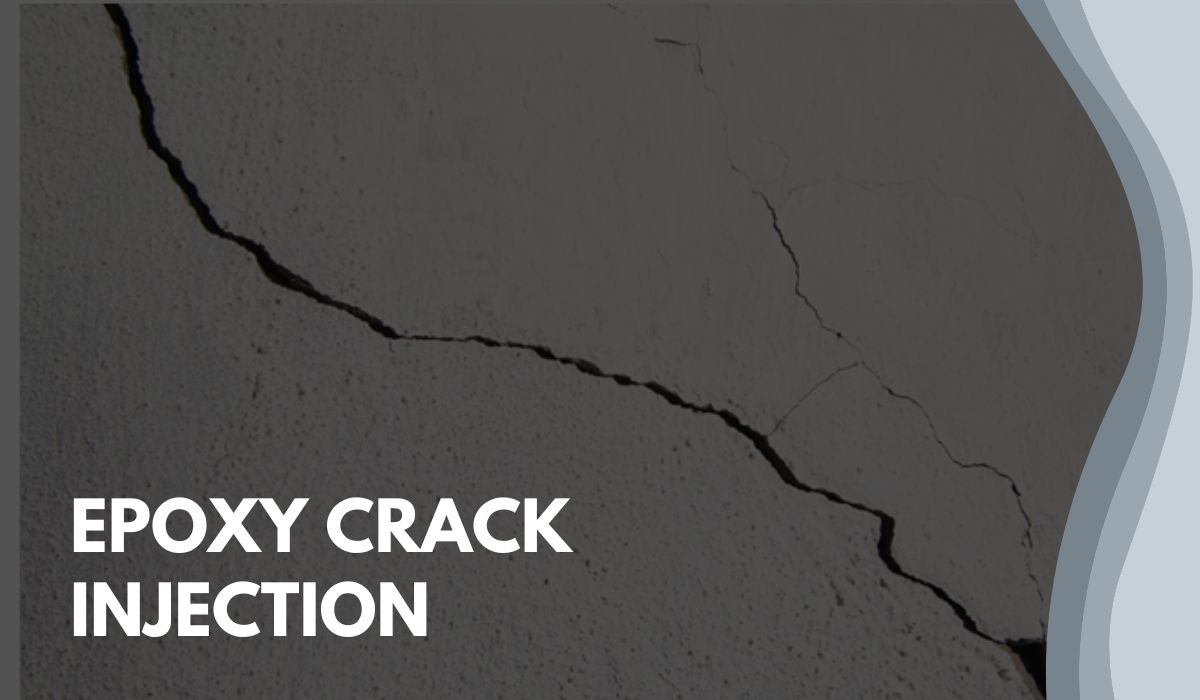


Applying a surface sealant to a crack that needs structural repair does not fix the problem. It hides it. The difference between a cosmetic crack treatment and a true structural repair is one of the most misunderstood decisions in commercial concrete maintenance, and getting it wrong leads to coating failures, moisture damage, failed inspections, and repair bills that dwarf what the correct fix would have cost the first time. At Extreme Industrial Coatings, we have been diagnosing and repairing concrete cracks in commercial and industrial facilities across Fresno and Northern California for over 15 years. This page breaks down exactly when epoxy crack injection is the right move and when a surface sealant is genuinely enough.
TL;DR
- Epoxy crack injection restores structural integrity by bonding concrete back together at full depth; surface sealants only treat the surface
- Dormant cracks that have stopped moving are the correct candidates for epoxy injection; active cracks that are still moving require a flexible repair system first
- Applying a surface sealant to a structural crack creates a failure point that will re-crack and, if a floor coating is installed over it, cause that coating to fail as well
- The U.S. General Services Administration (GSA) recognizes epoxy injection as the standard repair method for dormant structural cracks in concrete
- Extreme Industrial Coatings evaluates every crack before recommending a method; we do not sell injection when sealing is enough, and we do not apply a sealant when injection is what the crack actually needs
Why Concrete Crack Repair Is More Complicated Than It Looks

Not all cracks are equal, and the wrong repair method costs far more than the crack itself. The challenge is that most cracks look similar at the surface, regardless of whether the underlying cause is purely cosmetic or genuinely structural. A hairline crack from concrete curing shrinkage looks almost identical to a crack that has formed under load stress in a bearing slab. Without understanding what caused the crack and whether it is still moving, selecting a repair method is a guess.
Here is why facility owners and managers commonly misread the situation:
- Most products marketed as concrete crack fillers are designed for surface application only, and the packaging rarely makes clear what they cannot do
- A sealed crack that still has structural movement will re-crack, often wider and faster than the original, because the sealant creates a stress concentration point
- Moisture infiltration through unrepaired cracks compounds damage over time, leading to rebar corrosion, slab delamination, and subbase erosion
- The U.S. General Services Administration PBS-P100 Facilities Standards specifically identifies moisture penetration as a primary risk of leaving structural cracks unrepaired and supports epoxy injection as the correct method for dormant cracks
- In commercial facilities subject to health, safety, or structural inspections, an improperly repaired crack can create regulatory and insurance exposure that exceeds the cost of the repair itself
Before selecting a repair method, you need to know what type of crack you are dealing with. That starts with one critical distinction.
What Is the Difference Between a Dormant Crack and an Active Crack?

The most important question in concrete crack repair is not how wide the crack is. It is whether the crack is still moving.
Dormant crack: A crack that has stopped moving. The underlying cause, whether shrinkage during curing, a one-time settlement event, or an isolated overload, is no longer active. The crack width is stable and not changing over time. Dormant cracks are ideal candidates for epoxy injection.
Active crack: A crack that is still moving due to ongoing thermal cycling, structural loading, soil movement, moisture pressure, or vibration. The crack width changes over time, seasonally, or continuously. Active cracks require a flexible repair system or resolution of the underlying cause before any permanent repair will hold.
How to identify which type you are dealing with in the field:
- Monitor crack width over a 30 to 90 day period using reference marks or a crack comparator gauge to determine if the measurement is changing
- Look for crack patterns consistent with thermal movement, such as cracks that are wider in winter and narrower in summer
- Check for secondary cracking, branching, or spalling around the crack that indicates ongoing stress
- Assess the load history and substrate conditions, including drainage, soil type, and proximity to heavy equipment or vehicle paths
- Look for rust staining, which indicates moisture is reaching embedded rebar, and the crack is allowing water infiltration
The American Concrete Institute ACI 224.1R guide on the causes, evaluation, and repair of cracks in concrete structures is the technical standard most structural engineers and qualified repair contractors use to classify cracks before specifying a method. Misidentifying an active crack as dormant and injecting epoxy are among the most common and costly crack-repair mistakes in commercial facilities.
What Is Epoxy Crack Injection and How Does It Work?

Epoxy crack injection is a structural repair method that fills a concrete crack to its full depth with a two-component epoxy resin, bonding the two sides of the crack back together and restoring the load-transfer capacity of the concrete section. When properly applied to a dormant crack, the cured epoxy achieves tensile strength that matches or exceeds that of the surrounding concrete.
Here is how the process works from start to finish:
- The crack is cleaned of all dust, debris, oil, and surface contamination that would prevent epoxy adhesion
- Entry ports are installed along the length of the crack at calculated intervals based on crack depth and the epoxy viscosity being used
- A surface seal is applied along the crack face between ports to contain the injected resin and direct it into the crack rather than out along the surface
- Low-pressure epoxy resin is injected through the ports starting at the lowest or innermost point and working progressively outward
- The epoxy penetrates and fills the full depth of the crack under controlled pressure, displacing air and moisture as it advances
- Injection continues at each port until resin appears at the next port, confirming full penetration between injection points
- Once the epoxy has fully cured, the ports and surface seal are removed, and the surface is prepared for any specified finish coating
Properly executed epoxy injection is not a patch. It is a restoration of structural continuity across the crack plane. The International Concrete Repair Institute (ICRI) provides detailed guidelines on port spacing, injection pressure, and epoxy viscosity selection based on crack width and orientation, which qualified contractors follow on every structural injection project.
See our epoxy crack injection service page for more on how we specify and execute this repair in commercial and industrial facilities.
What Are Surface Sealants and When Are They the Right Choice?

Surface sealants are coating materials applied to the face of a crack to prevent moisture, dirt, and contaminants from entering. They do not penetrate the full depth of the crack, nor do they restore structural integrity. That is not a flaw in the product. It is simply what they are designed to do.
Where surface sealants perform well:
- Preventing moisture and contamination from entering hairline cracks in low-stress, non-structural surfaces
- Protecting concrete from chemical exposure and surface wear in areas where structural loading is not a factor
- Cosmetically filling minor surface crazing or plastic shrinkage cracking that is stable and not load-bearing
- Large surface areas with minor, shallow cracking where epoxy injection would be impractical and unnecessary
- Exterior flatwork, parking areas, and decorative concrete, where appearance and surface protection are the goals
Where surface sealants fall short:
- They cannot restore tensile or structural integrity across a crack plane under any circumstances
- They do not bond the two sides of a crack together at depth
- They will not prevent re-cracking if movement or structural loading continues
- They do not address moisture infiltration occurring below the surface of the slab
- They will not satisfy structural inspection requirements for commercial or industrial facilities where crack repair is being evaluated
- When applied over a crack in a slab that will receive a floor coating system, a surface-sealed crack creates a weak plane directly beneath the new coating that will reflect and re-crack
Epoxy Crack Injection vs. Surface Sealants: Side by Side
| Factor | Epoxy Crack Injection | Surface Sealant |
| Structural restoration | Yes, restores tensile strength at depth | No |
| Appropriate crack type | Dormant, structural, load-bearing cracks | Hairline, non-structural, surface cracks |
| Penetration depth | Full crack depth | Surface only |
| Bond strength | Meets or exceeds concrete tensile strength | Minimal, surface-level adhesion only |
| Moisture infiltration prevention | Yes, seals the full depth of the crack | Partial, surface face only |
| Re-cracking risk | Low when the underlying cause is resolved | High if movement or loading continues |
| Inspection and compliance | Meets structural repair standards | Not applicable to structural defects |
| Suitable underfloor coatings | Yes, when properly cured and profiled | No, creates a failure plane beneath the coating |
| Upfront cost | Higher | Lower |
| Long-term cost | Lower when correctly specified | Higher when used on the wrong crack type |
When Is Epoxy Crack Injection the Required Repair Method?

There are specific conditions in which a surface sealant is not merely insufficient but potentially negligent. These are the scenarios where epoxy crack injection is the correct and often the only defensible repair specification:
- Cracks in load-bearing concrete slabs in commercial and industrial facilities, where structural integrity is a safety requirement
- Structural wall cracks where moisture infiltration is occurring or is at direct risk due to crack width and orientation
- Any crack in concrete that will be covered by a new floor coating system; surface-sealed cracks create an immediate failure point beneath the new coating
- Facilities subject to regulatory inspection, insurance auditing, or third-party structural assessment, where the repair method must meet documented standards
- Any crack wider than 0.010 inches (0.25 mm) in a structural application, which is the threshold the American Concrete Institute uses as a general indicator that structural evaluation is warranted
- Situations where a previous surface sealant application has failed, and the crack has re-opened, often wider than before
- Cracks located near joints, columns, load transfer points, or machinery anchor locations in industrial floor slabs
- Cracks in concrete that will support racking systems, heavy equipment foundations, or industrial storage loads
When epoxy injection is skipped, and a surface coating is applied directly over an unrepaired structural crack, the result is predictable. The coating reflects the crack, often within the first thermal cycle after installation, and the failure requires full removal and replacement of the coating system on top of the structural repair that should have been done first. See our floor and wall crack repair services for how we handle pre-coating substrate repair as part of a complete project scope.
If you have cracks in your facility floor or walls and you are not sure what you are looking at, call us at 559-213-4731 for a free, honest assessment. We will tell you exactly what the crack needs, not what generates the most billable work.
What About Active Cracks? What Are the Options?
Epoxy injection is not appropriate for active cracks. The cured epoxy is rigid, and if the crack continues to move after injection, the epoxy bond will fracture again, often creating a crack that is more difficult to address than the original.
The correct approaches for active cracks depend on the cause and the structural context:
- Polyurethane injection uses a flexible foam or gel system that accommodates ongoing movement while sealing against moisture infiltration. It does not restore structural strength, but it is the correct moisture-control solution for active cracks in below-grade walls or water-retaining structures.
- Routing and sealing involves opening the crack to a uniform shape using a saw or router and filling it with a flexible elastomeric sealant designed to compress and extend with crack movement. This is the standard method for active cracks in slabs and flatwork.
- Addressing the root cause is often required before any surface repair will hold. Thermal expansion joint installation, drainage corrections, subbase stabilization, or load redistribution may be required first.
- A documented monitoring period is sometimes the right answer. If a crack’s activity cannot be confirmed, a structured observation period using crack comparator gauges or adhesive tell-tales provides the data needed to make a sound repair decision.
The ICRI Guideline No. 310.3R on the selection of methods and materials for repair of concrete surfaces is the industry reference for matching repair method to crack type and activity status. Following those guidelines is how qualified contractors avoid the expensive mistake of injecting a crack that is still moving.
How Concrete Crack Repair Affects Your Coating System

Crack repair does not happen in isolation in most commercial facilities. In the majority of projects, crack assessment and repair is the first step in a broader floor or wall coating installation. The condition of the substrate beneath a new coating system determines whether that system performs at its rated lifespan or fails prematurely.
Here is how unrepaired or incorrectly repaired cracks affect a new coating system:
- Cracks telegraph through new coatings, including epoxy, polyurea, and urethane cement, often within the first seasonal thermal cycle after installation
- Moisture migrating through unrepaired cracks creates vapor pressure beneath the coating that causes blistering, delamination, and bond failure
- Surface-sealed cracks create a weak adhesion plane directly beneath the new coating where stress concentrates, and failure initiates
- Properly injected and profiled cracks allow a new coating system to bond uniformly across the full substrate and perform at full rated lifespan
We evaluate existing cracks as a standard part of every flooring and coating project assessment. If crack repair is needed before a new system goes down, we handle it within the same project scope, so you don’t have to coordinate multiple contractors or wait for a separate trade to complete before coating can begin.
Relevant services that support crack repair within the complete project scope include our industrial epoxy flooring, urethane cement flooring, moisture control systems, and concrete flooring services.
Not sure if your cracks need to be repaired before a new coating goes down? Contact us for a free walkthrough and honest assessment. No hidden fees.
How Extreme Industrial Coatings Approaches Concrete Crack Repair

We are a family-owned business, and we have been doing this work honestly for over 15 years. Our approach to crack repair starts with evaluation, not with a recommendation. We look at the crack before we tell you what it needs.
Here is what our process looks like:
- We assess every crack for activity status before recommending a repair method; dormant vs. active identification is always the first step before any product is specified
- We do not upsell injection when a surface sealant is genuinely the right answer, and we do not apply a sealant when injection is what the structural situation requires
- We conduct a full substrate evaluation, including moisture testing, load history review, and existing coating assessment, before any recommendation is made
- We handle crack repair as part of a complete project scope, coordinating substrate prep, structural repair, and the finish coating system under one contract and one point of contact
- We provide full compliance documentation for every structural repair, including product data sheets and application records for facilities subject to inspection or audit
- We serve commercial and industrial facilities across Fresno and throughout Northern California
Our California industrial coatings and general contracting services teams work together on projects that require crack repair as part of a larger facility upgrade or coating installation, ensuring the work is completed in sequence without delays between trades.
We will give you a straight answer on what your cracks actually need. Call us at 559-213-4731 or contact us online for a free assessment. No pressure, no hidden fees.
Key Takeaways
- Epoxy crack injection restores structural integrity by filling a crack at full depth and bonding the concrete back together; surface sealants treat only the surface face and cannot accomplish this
- The single most important factor in crack repair method selection is whether the crack is dormant or active; epoxy injection is appropriate for dormant cracks only
- The GSA, ACI, and ICRI all support epoxy injection as the correct structural repair method for dormant cracks in commercial and industrial concrete
- Applying a surface sealant to a structural crack and then installing a floor coating over it almost guarantees coating failure at the crack location
- Active cracks require flexible repair systems, root cause resolution, or a monitoring period before permanent repair can be specified
- Extreme Industrial Coatings evaluates every crack honestly before recommending a method and handles repair as part of a complete substrate and coating project scope
Frequently Asked Questions About Epoxy Crack Injection and Concrete Crack Repair
What is epoxy crack injection used for in commercial buildings?
Epoxy crack injection restores structural integrity to dormant concrete cracks in commercial and industrial facilities. It is the correct repair method when a crack has penetrated through a structural slab or wall, when moisture infiltration is occurring through the crack, when the cracked surface will receive a new floor coating system, or when a structural inspection requires documented repair of a concrete defect. Properly injected epoxy fills the crack to full depth and cures to a tensile strength that meets or exceeds that of the surrounding concrete, effectively restoring the load transfer capacity of the cracked section.
How do I know if a concrete crack needs epoxy injection or just a surface sealant?
The key question is whether the crack is structural and dormant or cosmetic and non-load-bearing. If the crack runs through a bearing slab or structural wall, allows moisture infiltration, is wider than 0.010 inches in a load-bearing application, or a new floor coating will be installed over it, epoxy injection is the correct specification. If the crack is a hairline surface crack in a non-structural, stable slab with no moisture concern and no coating planned over it, a surface sealant may be entirely appropriate. When in doubt, have a qualified contractor assess crack width, depth, activity status, and structural context before selecting a method.
Can epoxy crack injection be used on walls as well as floors?
Yes. Epoxy crack injection is used on both horizontal slabs and vertical wall surfaces. The application technique differs slightly for vertical and overhead cracks, with port placement and injection sequence adjusted to account for gravity, but the structural outcome is the same. Wall crack injection is common in below-grade foundation walls, structural concrete walls in industrial facilities, and precast panel joints where structural continuity needs to be restored. Our floor and wall crack repair services cover both surfaces, and our wall and ceiling coatings team integrates repair into broader wall system projects as needed.
How long does epoxy crack injection last in an industrial facility?
When correctly specified for a dormant crack and properly executed, epoxy crack injection is a permanent structural repair. The cured epoxy does not shrink, creep, or degrade under normal industrial conditions, and the bond it forms with the concrete on both sides of the crack is mechanically stronger than the surrounding concrete. Failure of an epoxy injection repair almost always traces back to one of three causes: the crack was active rather than dormant at the time of injection and continued to move, the substrate was contaminated, and proper adhesion was not achieved, or the underlying cause of the crack was not addressed, and new cracking occurred adjacent to the repair.
Will my floor coating fail if I do not repair cracks before coating?
In most cases, yes. Cracks in a concrete substrate that are not properly repaired before a new coating system is installed will telegraph through the coating as the concrete continues its seasonal thermal movement. This typically appears as a re-crack in the coating surface at the exact location of the original concrete crack, often within the first year of service. Beyond cosmetic failure, unrepaired cracks that allow moisture vapor transmission will create hydrostatic pressure beneath the coating, leading to blistering, bubbling, and delamination in the surrounding area. The cost of removing a failed coating, repairing the substrate correctly, and reapplying the system is almost always significantly higher than the cost of doing the substrate repair correctly before the first coating application.
Protect Your Facility with the Right Concrete Crack Repair from the Start
Getting concrete crack repair right the first time is not complicated when you work with a contractor who takes the time to evaluate what you actually have before recommending a solution. Epoxy crack injection is one of the most effective structural repair tools available for commercial and industrial concrete, but only when it is specified for the right crack type. At Extreme Industrial Coatings, we make that determination honestly, every time.
We are family-owned, have served hundreds of California commercial facilities for over 15 years, and operate with no hidden fees and no upsells. Whether you need epoxy crack injection, surface repair, or a complete floor coating system installed over a properly prepped substrate, we handle it in one coordinated scope with one honest price.
Call us at 559-213-4731 for a free quote today!
Or contact us online, and we will respond quickly. Extreme Industrial Coatings is the team California facility managers trust when epoxy crack injection and structural concrete repair have to be done right the first time.