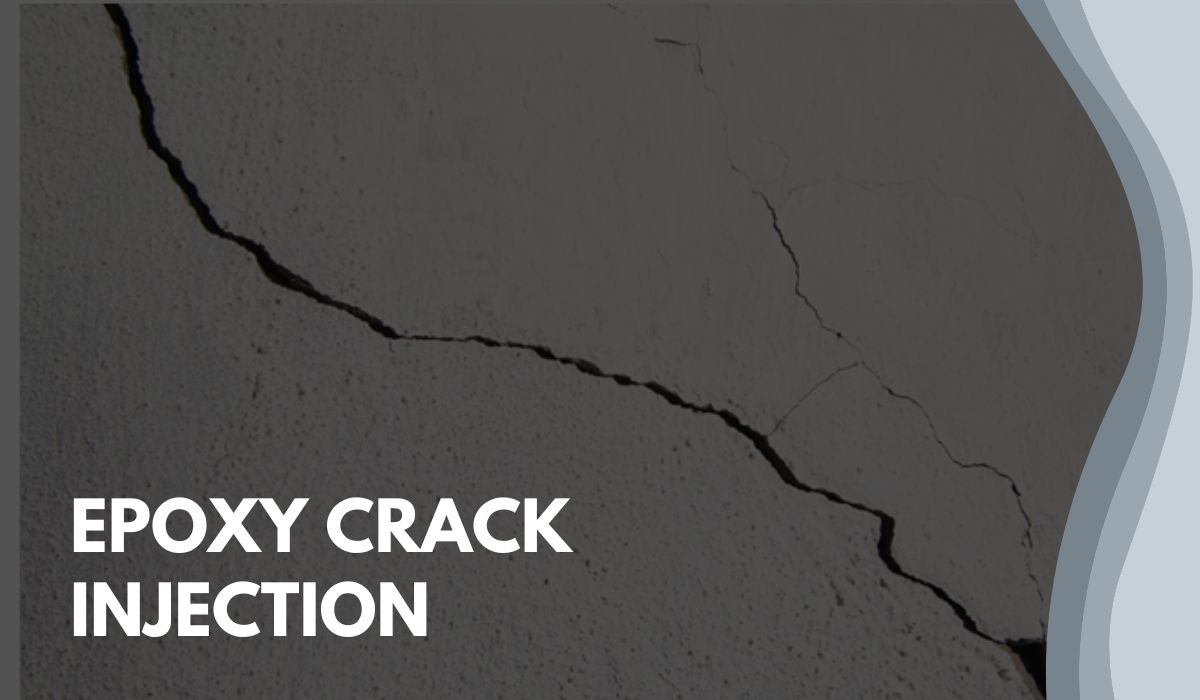


Most facility managers and property owners do one of two things when they notice a crack in a commercial building: they assume it is cosmetic and move on, or they see something that concerns them and wait too long to get an answer. Both errors carry real costs. Treating a structural crack as cosmetic leads to progressive deterioration, coating failures, and repair bills that grow the longer the problem sits. Waiting for an evaluation when the warning signs are present risks closing the window for a straightforward epoxy crack injection repair, leaving more invasive and expensive options on the table.
At Extreme Industrial Coatings, we have been evaluating and repairing concrete cracks in commercial buildings across Fresno and Northern California for over 15 years. This page gives you the information you need to know when a crack requires professional evaluation right now.
TL;DR
- Not all concrete cracks are equal; some are cosmetic and stable, while others signal active structural movement that requires immediate attention
- Displacement between crack faces, cracks wider than 0.25mm in structural applications, moisture at the crack, and cracks that have grown or re-opened after patching are all signs that require professional evaluation
- Ignoring structural cracks leads to rebar corrosion, coating system failure, regulatory exposure, and significantly higher repair costs over time
- The U.S. Army Corps of Engineers, the American Concrete Institute, and the International Building Code all provide standards that define when concrete cracks cross the threshold from cosmetic to structural concern
- Extreme Industrial Coatings evaluates every crack honestly before recommending a repair method, with no hidden fees and no upsells
Why Commercial Building Cracks Are Not All the Same

Most commercial facilities will develop some degree of concrete cracking over their service life. Concrete shrinks as it cures, responds to thermal cycling, and shifts under load. Some of that movement produces cracks that are entirely routine. Others are a direct signal that something structural is happening. The goal is not to panic at every crack you see. The goal is to know which ones demand a closer look.
Cracks that are typically non-urgent include:
- Hairline surface cracks from concrete curing shrinkage in slabs less than one year old, with no accompanying symptoms
- Minor surface crazing or map cracking with no measurable depth and no structural context
- Isolated cosmetic cracks in non-load-bearing interior partition walls with no moisture, displacement, or growth
- Very narrow cracks under 0.010 inches with no moisture present, no displacement between crack faces, and no observed change over time
Cracks that warrant prompt professional evaluation include:
- Any crack wider than 0.25mm (0.010 inches) in a load-bearing surface, which is the threshold the American Concrete Institute ACI 318 uses as a general indicator that structural evaluation is warranted
- Cracks accompanied by moisture, water seepage, rust staining, or white mineral deposits on the surface
- Any crack showing vertical or horizontal displacement where one side of the crack sits higher or lower than the other
- Cracks located near structural elements, including columns, load-bearing walls, foundations, beam intersections, and equipment anchor points
- Cracks that have visibly grown or changed since they were first noticed
- Multiple cracks appear in a pattern across a surface rather than in isolation
If you are looking at one or more items in that second list, the time to act is now, not after the next inspection cycle.
What Does Crack Width Actually Tell You?
Crack width is a useful starting point for assessment, but it is not the whole picture. Location, pattern, displacement, and moisture all carry as much diagnostic weight as a measurement. That said, width gives you a consistent reference point for urgency.
| Crack Width | General Interpretation | Recommended Action |
| Under 0.1mm (hairline) | Surface shrinkage; typically cosmetic | Monitor; seal if moisture exposure risk exists |
| 0.1mm to 0.25mm | Minor; evaluate based on location and context | Professional assessment recommended |
| 0.25mm to 1mm | Potentially structural; active or dormant evaluation needed | Professional evaluation required |
| Over 1mm | Likely structural significance | Immediate professional evaluation |
| Any width with displacement | Structural movement, regardless of measurement | Immediate professional evaluation |
The U.S. Army Corps of Engineers Engineer Manual EM 1110-2-2002 on the evaluation and repair of concrete structures provides detailed guidance on crack width interpretation in the context of structural assessment. Their framework consistently treats displacement as the most critical indicator regardless of width, a position shared by the American Concrete Institute and the International Building Code.
Width alone never tells the whole story. A hairline crack through the base of a structural column carries more significance than a wider crack in a non-load-bearing partition. Context is everything.
9 Warning Signs a Commercial Building Crack Needs Immediate Professional Evaluation

Warning Sign 1: The Crack Has Visible Displacement Between the Two Faces
Displacement means the two sides of the crack are no longer flush with each other. One face has shifted up, down, or sideways relative to the other. This is not a surface phenomenon. It means the concrete on either side of the crack is moving as separate structural elements rather than as a single unit.
Even a small amount of measurable displacement in a load-bearing slab or structural wall indicates that load transfer across the crack plane has been compromised. This warrants a same-week professional evaluation, not a note on a maintenance log.
Warning Sign 2: The Crack Is Wider Than a Credit Card Edge
A practical field test that does not require measuring instruments: a standard credit card edge is approximately 0.76mm thick. If a crack accepts the edge of a credit card, it has likely exceeded cosmetic thresholds in any structural application.
Combined with a location near load-bearing elements or any other warning sign on this list, a crack that passes the credit card test is worth listening to. Document it, measure it, and get a qualified contractor on-site.
Warning Sign 3: Moisture, Water, or Efflorescence Is Present at the Crack
Efflorescence is the white or gray mineral deposit left on the surface of concrete when water carries dissolved salts through the material and evaporates at the surface. If you see white deposits along a crack, water has been moving through that crack repeatedly and over time.
Active moisture at a crack is not just a symptom; it is a cause. It is a damage multiplier. Water infiltrating through a structural crack accelerates rebar corrosion, erodes the subbase beneath the slab, and causes freeze-thaw damage in regions with cold winters. In facilities with floor coatings or planned coatings, moisture migrating through a crack can cause a buildup of vapor pressure, leading to coating delamination.
Our moisture control systems page covers how we address vapor emission and moisture infiltration as part of a complete repair and coating project.
Warning Sign 4: The Crack Is Growing or Has Changed Since You First Noticed It
A crack that is widening, lengthening, or deepening is an active crack. The underlying cause has not been resolved. This distinction matters enormously for selecting a repair method: epoxy crack injection is appropriate only for dormant cracks that have stopped moving. An active crack injected with rigid epoxy will re-fracture as movement continues.
If you want to confirm whether a crack is active, apply pencil marks or adhesive tell-tales across the crack at 30-day intervals and measure the gap. If the measurement changes, you have an active crack that requires root cause assessment before any repair will hold.
Warning Sign 5: The Crack Runs Through or Near a Structural Element
Location determines significance as much as any measurement. A crack near any of the following elements requires professional evaluation regardless of its width:
- Column bases and pilasters
- Load-bearing wall intersections
- Foundation walls and grade beams
- Beam-to-slab connections
- Heavy equipment pads and machinery anchor locations
- Areas near the racking system base plates in warehouses and distribution centers
A hairline crack running through the base of a column or along a foundation wall is structurally significant in a way that a wider crack in a non-load-bearing interior wall simply is not. If the crack is near anything that supports, get it evaluated.
Warning Sign 6: Multiple Cracks Have Appeared in a Pattern
Isolated cracks can have isolated causes. Patterned cracking across a surface signals a systemic issue. Here is what common crack patterns typically indicate:
- Diagonal cracks at 45 degrees from the corners of openings suggest differential settlement or structural overload, distributing stress toward the weakest points
- Horizontal cracks in below-grade or basement walls indicate lateral soil pressure pushing against the wall; these are among the most structurally significant cracks in commercial building foundations
- Map or alligator cracking across a slab surface may indicate alkali-silica reaction within the concrete, subbase failure, or excessive loading across a broad area
- Parallel cracks running along a consistent line often indicate that rebar is corroding beneath the surface, and the expanding rust is fracturing the concrete from within
A single crack in isolation is often manageable. A pattern of cracks is a conversation your building is having with you about a systemic problem.
Warning Sign 7: Rust Staining Is Visible Along or Near the Crack
Brown or orange staining along a crack line is not a cosmetic issue. It means the embedded steel reinforcement has been exposed to moisture and is actively corroding. Corroding rebar expands as it oxidizes, exerting internal pressure on the concrete that causes progressive spalling and structural deterioration.
The American Concrete Institute ACI 318 establishes minimum concrete cover requirements over rebar, specifically to prevent moisture from reaching the steel. When rust staining is visible at the surface, that protective cover has been compromised. The longer this condition goes unaddressed, the more concrete will spall away and the more costly the repair becomes.
Warning Sign 8: Doors or Windows in the Building Are Sticking or Misaligned
This one is easy to dismiss as a building maintenance issue rather than a structural one. Do not. When doors and windows begin sticking, binding, or showing gaps at their frames, it is frequently a sign that the building structure is moving. Foundation settlement, differential soil movement, and slab displacement all manifest as frame distortion before they become visible as wide cracks in floors and walls.
If you are seeing sticking doors or misaligned window frames alongside any cracking in floors or walls, you are likely looking at a structural movement issue that needs evaluation as a whole-building problem, not a series of unrelated maintenance items.
Warning Sign 9: The Crack Has Already Been Patched and Has Re-Opened
A previously patched crack that has reopened is telling you two things simultaneously. First, the crack is active and was still moving when the patch was applied. Second, the repair method used was almost certainly incorrect for the crack type.
Surface sealants applied to structural cracks do not prevent re-cracking. They create a stress concentration point that often causes the crack to reopen wider and faster than it did originally. If you are looking at a crack that has been patched at least once and has opened again, you are past the point where any surface treatment will solve the problem. Structural epoxy crack injection, properly specified for a dormant crack after the active cause has been resolved, is the correct path forward.
See our epoxy crack injection and floor and wall crack repair services for how we approach reopened and previously patched cracks in commercial facilities.
If your facility shows any of these warning signs, do not wait. Call us at 559-213-4731 for a free, honest assessment. We will tell you exactly what you are dealing with.
What Happens If Structural Cracks Are Left Unrepaired?

Delaying professional evaluation when a crack shows one or more of the above warning signs is not a neutral decision. It is a decision to let the damage compound. Here is what that looks like in practice:
- Structural deterioration accelerates — load transfer capacity across the crack plane continues to degrade over each seasonal cycle; what requires a straightforward epoxy injection today may require section removal and replacement after another year of unchecked movement
- Rebar corrosion advances — every wet season pushes more moisture through an unrepaired crack and further along the rebar; the expansion from corrosion fractures more concrete from within, expanding the repair scope with each passing season
- Floor and wall coating systems fail — any coating installed over an unrepaired structural crack will reflect and re-crack, typically within the first thermal cycle; the coating removal and reinstallation cost almost always exceeds what the structural repair would have cost before the coating went down
- Moisture and secondary damage compound — persistent infiltration degrades subbase materials, undermines slab support, promotes mold growth in enclosed spaces, and compromises insulation and interior finishes over time
- Regulatory and insurance exposure grows — OSHA’s Walking-Working Surfaces Standard establishes floor structural integrity requirements for commercial facilities; documented structural defects that are known and unaddressed create liability exposure that compounds alongside the physical damage
- Repair cost escalates — a dormant crack that qualifies for epoxy injection today carries a fraction of the cost of a structural section repair after progressive deterioration has expanded the damage zone
Our floor and wall crack repair services are built around catching these situations before a straightforward, cost-effective repair is no longer on the table.
Where Are Structural Cracks Most Commonly Found in Commercial Buildings?
Knowing where to look is half the evaluation. These are the locations in commercial and industrial buildings where structural cracking is most commonly found and most often underestimated:
- Concrete floor slabs near column lines — load concentration at column bases creates stress in the surrounding slab; cracks here often indicate overloading or differential settlement and carry more significance than cracks in open field areas
- Below-grade foundation walls — lateral soil pressure and hydrostatic water pressure act continuously against foundation walls; horizontal cracks at mid-wall height are especially significant indicators of lateral force exceeding design capacity
- Tilt-up panel joints and connections — commercial and industrial buildings constructed with tilt-up concrete panels develop cracking at panel connections and reveal connections under seismic and wind loading cycles
- Slab-on-grade perimeter edges — frost heave, subbase erosion from drainage issues, and differential settlement are most active at slab edges and produce cracks that propagate inward over time
- Around door and window openings — stress concentrations at opening corners produce diagonal cracking at 45 degrees when structural movement occurs anywhere in the building
- Equipment pads and anchor locations — vibration from machinery, thermal cycling from heated equipment, and point loads at anchor bolts all accelerate cracking at equipment bases in manufacturing and processing facilities
- Parking structure decks and ramps — vehicle loading, chloride infiltration from de-icing products, and continuous thermal cycling make parking structures among the most aggressive environments for progressive concrete deterioration in California commercial real estate
Our concrete flooring, wall, and ceiling coating teams regularly encounter structural cracking across all of these locations. Location context is always part of how we evaluate and specify a repair.
What Does a Professional Concrete Crack Evaluation Actually Include?

Many property managers and facility directors hesitate to request an evaluation because they are unsure what they are agreeing to or how invasive the process is. A qualified commercial crack evaluation is non-invasive, typically completed in a single site visit, and costs a fraction of the cost of repairing the problem, let alone the cost of discovering a structural problem after a new coating system has been installed over it.
Here is what a thorough professional evaluation covers:
- Visual inspection and complete documentation of all visible cracks, including width measurement, length, location mapping, and a photographic record
- Crack width measurement using a comparator gauge or feeler gauge to determine whether widths exceed structural thresholds per ACI and applicable building code standards
- Activity assessment to determine dormant vs. active status using monitoring marks, historical documentation, or crack comparator readings taken over an observation period
- Moisture testing at and near crack locations to identify active infiltration, vapor emission rates, and subbase saturation conditions
- Pattern analysis to determine whether cracking is isolated to a localized cause or part of a systemic issue across the structure
- Structural context review covering proximity to load-bearing elements, equipment loads, joint locations, and previous repair history
- Substrate condition assessment, including the status of any existing repair attempts and their current performance
- A written recommendation including repair method, project scope, timeline, and documentation suitable for insurance carriers, building inspectors, or regulatory compliance records
The International Building Code, as established by the International Code Council, establishes structural integrity requirements for commercial buildings that often serve as the basis for what is expected in a documented repair record. Having that documentation is not just good practice; it’s essential. It is protection.
How Extreme Industrial Coatings Evaluates and Repairs Commercial Building Cracks

We are family-owned, and we have been doing this work honestly for over 15 years. Our evaluation process starts with what the crack is telling us, not with what repair generates the most work. We examine every crack in its full context before making a single product recommendation.
Here is how we approach commercial crack assessment and repair:
- We document and measure before we recommend; every evaluation starts with a width measurement, location mapping, and activity assessment
- We identify crack type, activity status, and structural context as the foundation of any repair specification
- We do not apply surface treatments where injection is required, and we do not oversell structural injection where a surface repair is genuinely sufficient
- We handle crack repair as part of a complete project scope that includes substrate prep, structural repair, moisture control, and the finish coating system under one coordinated contract
- We are fully licensed and insured, and provide compliance documentation for every structural repair performed
- We serve commercial and industrial facilities across Fresno and throughout Northern California
When crack repair is the first step in a larger floor or wall coating project, our industrial epoxy flooring, California industrial coatings, and general contracting services teams coordinate the full scope so the substrate and the system are specified and installed together without handoff delays.
We will give you a straight, honest answer on what your cracks actually need. Call us at 559-213-4731 or contact us online for a free assessment. No pressure, no hidden fees.
Key Takeaways
- Commercial concrete cracks range from entirely cosmetic to immediately significant; the difference lies in width, displacement, location, moisture, pattern, and whether the crack is active or dormant
- Nine warning signs consistently indicate that professional evaluation is required: displacement between faces, width exceeding credit card edge thickness, moisture or efflorescence, active growth, proximity to structural elements, patterned cracking, rust staining, door and window misalignment, and a previously patched crack that has re-opened
- Delaying evaluation on a crack showing these warning signs accelerates structural deterioration, causes floor coating failures, and increases repair costs with every season that passes
- The ACI, U.S. Army Corps of Engineers, OSHA, and International Building Code all provide standards that define when concrete cracking crosses from routine to structurally significant
- A professional crack evaluation is non-invasive, completed in one site visit, and costs far less than any repair or the cost of a coating system installed over an unaddressed structural defect
- Extreme Industrial Coatings evaluates every crack honestly, recommends only what the structural situation requires, and handles repair and coating as a complete, coordinated scope
Frequently Asked Questions About Commercial Concrete Crack Repair and Epoxy Injection
How do I know if a crack in my commercial building is structural or cosmetic?
The clearest indicators that a crack is structural rather than cosmetic are displacement between the two faces, moisture or rust staining at the crack, a width exceeding 0.25mm in a load-bearing application, proximity to structural elements like columns or foundation walls, and any active growth in the crack since it was first noticed. A crack wider than the edge of a credit card, that shows one side sitting higher than the other, or that has reopened after a previous patch, is not a cosmetic issue. Any crack showing one or more of those characteristics warrants professional evaluation before any repair or coating work is planned.
What width concrete crack requires professional repair in a commercial building?
The American Concrete Institute uses 0.010 inches (approximately 0.25mm) as a general threshold for structural evaluation in load-bearing concrete applications. In practice, width is one of several inputs. A crack narrower than that threshold still requires professional evaluation if it shows displacement, moisture infiltration, rust staining, or is located near a structural element. Conversely, a wider crack in a confirmed non-load-bearing, non-structural surface may require only surface sealing. Width is a starting point for assessment, not a standalone decision tool.
How quickly does a structural concrete crack need to be repaired?
Any crack showing displacement, active moisture infiltration, rust staining, or measurable growth should be evaluated within days, not weeks. The longer a structural crack goes without assessment and repair, the more the damage compounds through rebar corrosion, subbase erosion, and progressive load transfer degradation. For wide, actively growing cracks or those located near load-bearing elements in a facility with active operations and occupants, immediate evaluation is the responsible course of action. For stable dormant cracks that are structurally significant but not actively worsening, evaluation and repair should be completed before any floor coating system is installed over the affected area.
Can epoxy crack injection stop water from coming through a concrete wall or floor?
Yes, when the crack is dormant and correctly specified for epoxy injection. Low-pressure epoxy injection fills the crack at its full depth, sealing the infiltration path entirely. For active cracks that are still moving, polyurethane injection with a flexible foam or gel formulation is the preferred moisture-sealing method because it accommodates ongoing movement without fracturing. For below-grade walls under significant hydrostatic pressure, the moisture source and drainage conditions must also be addressed as part of the repair scope. Sealing the crack face without addressing the pressure driving the water will shift the problem to an adjacent location. Our moisture control systems services cover the full scope of moisture management alongside structural crack repair.
How much does commercial concrete crack repair cost in California?
Cost depends on the number and length of cracks, the repair method required, the accessibility of the affected surfaces, and whether the repair is part of a broader coating or remodeling project. Surface sealant repairs for cosmetic cracks are among the lowest-cost concrete maintenance tasks in any facility. Epoxy crack injection for structural cracks in commercial slabs and walls is a cost-effective repair that is almost always less expensive than coating system failure, rebar corrosion, or structural section replacement that result from leaving the problem unaddressed. We provide honest, detailed quotes with no hidden fees after a proper on-site evaluation. Call us at 559-213-4731 for a free assessment and accurate scope for your specific situation.
Do Not Let a Crack You Can See Become a Problem You Cannot Ignore
The warning signs are almost always visible before a structural crack becomes a crisis. Displacement, moisture, rust, patterns, and re-opened patches are all telling you something, and the time to act on that information is before a new coating system goes down over it or before another wet season pushes the deterioration further.
At Extreme Industrial Coatings, we have been providing honest commercial concrete crack repair across Fresno and Northern California for over 15 years. We are family-owned, fully licensed, and operate with no hidden fees or upsells. You get a clear assessment, a correct repair specification, and a contractor who handles the full scope from substrate evaluation through finish coating.
Call us at 559-213-4731 for a free quote today!
Or contact us online, and we will respond quickly. Extreme Industrial Coatings is the team California facility managers and property owners trust when commercial concrete crack repair has to be done right.